

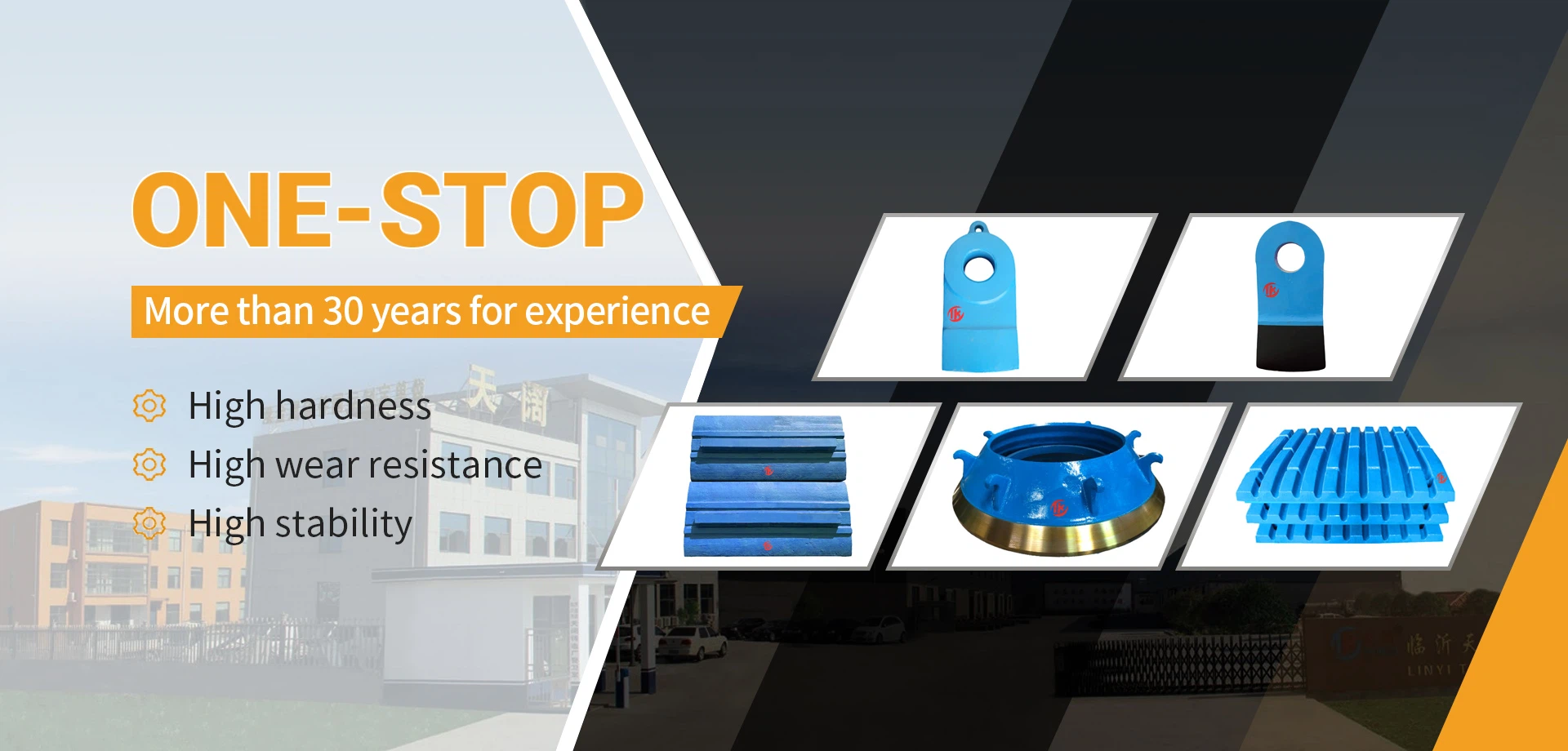
Crusher hammer heads are mainly divided into four categories based on their material, each with its own advantages and suitability for different working conditions:
1. High-manganese steel hammers: Containing 10%-14% manganese, their core advantages are exceptional toughness and excellent impact resistance. Their surface undergoes rapid work-hardening upon impact (increasing hardness by 3-5 times), making them suitable for crushing medium-hardness materials with high impact loads, such as limestone and coal, and suitable for jaw and impact crushers. Their disadvantages are low hardness at room temperature and average wear resistance without strong impact.
2. High-chromium cast iron hammers: Containing 15%-30% chromium, they offer extremely high hardness (HRC60 and above) and excellent wear resistance, making them the preferred choice for crushing hard rocks such as granite and basalt, and suitable for cone and impact crushers. However, they suffer from poor toughness, are not resistant to severe impact, and are prone to breakage under high-impact conditions.
3. Alloy Steel Hammers: Made from low-carbon steel with alloys such as chromium, molybdenum, and nickel, these hammers offer both high strength and toughness, superior wear resistance to high-manganese steel, and superior impact resistance to high-chromium cast iron. They are compatible with a variety of crushers, including jaw and cone crushers, and can handle mixed materials, offering high versatility.
4. Composite Hammers: For example, a composite of high-chromium cast iron (wear-resistant layer) and high-manganese steel (base material) retains the wear resistance of high-chromium cast iron and the impact resistance of high-manganese steel. These hammers are suitable for crushing complex materials with high hardness and high impact, but they come at a higher cost.
When selecting a hammer, consider the material hardness, crusher type, and operating conditions, balancing the requirements for wear and impact resistance.


